


2024 Archive
2024 Wayne County Airport Authority Board
Meeting Minutes
Wednesday, January 17, 2024 (Audit Committee)
Wednesday, April 17, 2024 (Ethics Committee)
Wednesday, April 17, 2024 (Audit Committee)
Wednesday, July 17, 2024 (Audit Committee)
Wednesday, October 30, 2024 (Audit Committee)
Wednesday, November 6, 2024 (Zoning Board)
Multi-Sensory Room
McNamara Terminal

The Multi-Sensory Room is designed to provide a calm, supportive and welcoming environment for individuals with sensory sensitivities or cognitive disabilities, and their families. The room allows travelers to take a break from the sights and sounds of a busy airport. It boasts several features that support self-regulation and help reduce stress:
- Bubble Tubes: Promote visual stimulation. Due to the predictable rhythmic motion of the water, the tubes can promote relaxation as well.
- Crash Pad: Allows for increased tactile input due to the material and flexibility of the pad. The large pad creates deep pressure, which can help reduce anxiety.
- Dimmable Lights: Control the color and brightness of the room’s lighting to best suit the passenger.
- Fiber Optic Bean Bag: Provides various sensory feedback to promote the regulation of the nervous system. The fiber optic strands attached to the bean bag provide visual input in a predictable manner and tactile input through touch.
- Gel Floor Tiles: Increase visual stimulation by watching the gel move within them. They also provide tactile input through touch to make the gel move.
- Musical Hand Wall: Allows users to create the sound of their choice by placing their hand on the wall.
- Rocking Chair: Promotes relaxation and helps regulate the nervous system by the rhythmic rocking motion.
- Sensory Wall: Provides visual stimulation and consists of different shapes and textures to increase tactile input, helping calm users and promote relaxation.
- Squeezy Seat: Provides tension around the trunk of the body. The pressure can resemble a hug and can help promote relaxation and calm an individual.
- Tree with built-in cubby: Fosters a sense of safety and allows the individual to escape sensory input from the environment.
Travelers can find the room across from Gate A36. Those wishing to enter the room must use their cell phones to call for an access code; the phone number is posted by the door. The Multi-Sensory Room is open 24 hours a day, seven days a week and has a maximum capacity of six occupants.
Confined Spaces
Wayne County Airport Authority must communicate our confined space hazards to entrants prior to their work. Please complete the Confined Space Entry Form to begin the process of entering confined spaces at Detroit Metro Airport and Willow Run Airport or complete this form for questions regarding the classification of any of our spaces.

Confined spaces can be very dangerous. Because of their physical construction, confined spaces could be subject to the accumulation of loose materials (engulfment in fluids or during excavations) or explosive, toxic, or flammable contaminants or could have an oxygen deficient atmosphere. Between Detroit Metro Airport and Willow Run Airport, the Wayne County Airport Authority is the host employer for thousands of confined spaces.
According to OSHA, a confined space is a space that:
- Is large enough and so configured that an employee can bodily enter and perform assigned work
- Has limited or restricted means for entry or exit
- For example, tanks, vessels, silos, storage bins, hoppers, vaults, and pits
- Is not designed for continuous employee occupancy
All of the following are examples of confined spaces:
Storage tanks
Process vessels
Boilers
Ventilation ducts
Sewers
Underground utility vaults
Tunnels (after construction is completed)
Pipelines
Open top spaces more than four feet in depth, such as pits, tubs, vaults, and vessels
Submit a form for a confined space entry at Detroit Metro or Willow Run Airport.
This is a requirement for both permit-required and non-permit required confined space entries.
Safety Management System
A Safety Management System (SMS) promotes the continuous improvement of safety through specific methods to predict hazards from employee reports and data collection, which is then used to analyze, assess, and control risk. This process is designed to incorporate all three forms of rationale—reactive, proactive, and predictive thinking. It provides for a systematic approach to achieving acceptable levels of safety risk through its four functional components: Safety Policy, Safety Assurance, Safety Risk Management, and Safety Promotion.
The Wayne County Airport Authority's SMS Plan is designed for the benefit of the traveling public, as well as WCAA partners, stakeholders and employees.
Safety
Wayne County Airport Authority is committed to airport operations safety. We aim to enthusiastically support our employees, tenants, and contractors to ensure the safest possible conditions for all types of work occurring both at Detroit Metro Airport and Willow Run Airport – from the smallest tasks to largest projects.
Small Business Operators Arriving Ready (SOAR)

DTW, Michigan's gateway to the world, is committed to helping small businesses reach a global audience through the Small Business Operators Arriving Ready (SOAR) pilot program. SOAR creates access and opportunity for business owners to operate their specialty retail concept in the Warren Cleage Evans Terminal and showcase their products to thousands of travelers every day.
The First Lady of Wayne County, Renata C. Evans, formulated the idea of a small business program at DTW. A former small business owner herself, Mrs. Evans understood the importance of investing in training for entrepreneurs and creating opportunities for their growth. Through SOAR, the Airport Authority helps small business owners learn how to operate in an airport environment, ensuring they will be ready to thrive on their own in an airport concessions program.
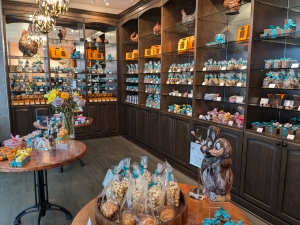
DTW selected Quix Chocolate to be one of the the first participants in the SOAR pilot program.
Quix Chocolate was founded as a family business in Lanklaar, Belgium in 1947. Quix, now based in Ferndale, Michigan, produces approximately 40 traditional flavors of Belgian chocolates using original recipes. Quix has been recognized by Crain’s Detroit Business and Hour Detroit Magazine.
Doing Business at the Airport
Businesses interested in future SOAR opportunities should have a strong concept with operational experience that attracts customers and supports a dynamic airport experience.
We are Open 7 days per week, 365 days per year
Interested businesses should be aware of safety, security/credentialing, logistics, insurance, and space development requirements in business planning considerations.
Announcements of solicitations can be found here. The Airport Authority officially posts solicitations on the MITN website located at www.mitn.info. If you have any questions, please email the Wayne County Airport Authority Procurement Department, or call (734) 247-7900.